Feed digilinux.ru [copy] http://digilinux.ru/feed/ has loading error: cURL error 22: The requested URL returned error: 403 Forbidden
Feed Dr. Mickey Lauer [copy] https://www.vanille-media.de/feed.xml has loading error: https://www.vanille-media.de/feed.xml is invalid XML, likely due to invalid characters. XML error: XML_ERR_NAME_REQUIRED at line 1319, column 31
Feed freepost [copy] https://freepo.st/rss/new has loading error: A feed could not be found at `https://freepo.st/rss/new`; the status code is `200` and content-type is `text/html; charset=utf-8`
Feed justine.lol [copy] https://justinetunney.com/rss.xml has loading error: cURL error 60: SSL certificate problem: certificate has expired
Git Source Code Review

Since its release in December 2005, git has taken over the software industry. In combination with GitHub it is now a powerful tool to publish and share code: From big teams (linux kernel, id Software, Epic Unreal) to single individual (Prince of Persia, Another world, Rick Dangerous), many have adopted it as their main SCM.
I wanted to get a better understanding of the "stupid content tracker" and see how it was built so I spent a few weeks in my spare time reading the source code. I found it tiny, tidy, well-documented and overall pleasant to read.
As usual I...
The Computer Graphics Library
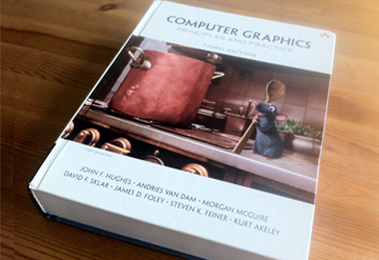
Back in the 90s, one book was ubiquitous in the world of Computer Graphics. Commonly called "The CG Bible", Computer Graphics: Principles and Practice gathered a huge part of the knowledge of the time. It was commonly referenced by the best programmers of that era in interviews and articles. By 1998, the book popularity had been acknowledged with a Front Line Award.
More...
Algorithms and Data structures books: One size doesn't fit them all
Over the years running this moderately popular website, I have been asked many times what is the best book about Algorithms and Data Structures. The answer is always "It depends" ! It depends on how the programmer's brain works and what kind of notation he is comfortable with. There are many flavors of mindset out there but it usually comes down to Mathematics and Illustrations...
Forth и шейдеры

Речь у нас пойдёт о поэзии. Минимализм языка программирования Forth и красота образов демосцены подтолкнули программиста Брэда Нельсона к идее Forth Haiku. Подражая японским хайку, Брэд писал свои первые программы из трёх строк, состояли они из пяти, семи, и снова пяти слов. Но в отличии от традиционного японского жанра, поэзия на языке Forth порождала картины не в воображении читателя, а зримо, на экране компьютера. Эта затея могла бы остаться причудой одинокого фаната компьютерного ретро (Forth прочно ассоциируется со старыми добрыми семидесятыми), если бы Брэд не воплотил её на самой что ни на есть современной платформе (WebGL) и не сделал бы...
Brainfind a Stranger in the Alps
In which is described an Inferno program that generates Linux/x86 executables, the design of a simple VM, and programs that generate programs (but all of it will be horribly disappointing).
[…]
Dropping Feedburner
Just a quick note to mention that I’m dropping the Feedburner RSS feed in favor of a regular RSS feed. I’ll leave it around for some undecided amount of time, but you’ll want to update your RSS readers to point to http://debu.gs/blog/feed.rss when you can. The URL has been fixed in the nav bar and in the rel="alternate" link in the head tag.
[…]
Learning Legendary Hardware

If you love software, you also try to understand the hardware to the deep down. It is not an easy task : There are many great programming books but few that explains hardware very well (as Michael Abrash once wrote: the Intel Documentation is "slightly more fun to read than the phone book"). In my quest for knowledge, I found two hardware books to be outstanding:
Code: The Hidden Language of Computer Hardware and Software.
Computer Organization and Design.
Those books are good for "current" hardware but there is a lot to learn from previous generations. The cult machine That Wouldn't Die,...
Decyphering the Business Card Raytracer

I recently came across Paul Heckbert's business card raytracer. For those that have never heard of it: It is a very famous challenge in the Computer Graphics field that started on May 4th, 1984 via a post on comp.graphics by Paul Heckbert ( More about this in his article "A Minimal Ray Tracer" from the book Graphics Gems IV).
The goal was to produce the source code for a raytracer...that would fit on the back of a business card.
Andrew Kensler's version is mesmerizing and one of the greatest hack that I have seen. Since I am curious, I decided to...
More Doom III BFG Documentation
id Software developer Jan Paul Van Waveren (a.k.a Mr Elusive) is sharing some more of the knowledge gained while working on Doom 3 BFG. This part focuses highly on the choice of data-structures and how paramount cacheline are to performances.