Feed digilinux.ru [copy] http://digilinux.ru/feed/ has loading error: A feed could not be found at `http://digilinux.ru/feed/`; the status code is `200` and content-type is `text/html; charset=utf-8`
Feed freepost [copy] https://freepo.st/rss/new has loading error: cURL error 6: Could not resolve host: freepo.st
Feed justine.lol [copy] https://justinetunney.com/rss.xml has loading error: cURL error 60: SSL certificate problem: certificate has expired
Embedding Wren in Hare
I’ve been on the lookout for a scripting language which can be neatly embedded into Hare programs. Perhaps the obvious candidate is Lua – but I’m not particularly enthusiastic about it. When I was evaluating the landscape of tools which are “like Lua, but not Lua”, I found an interesting contender: Wren.
I found that Wren punches far above its weight for such a simple language. It’s object oriented, which, you know, take it or leave it depending on your use-case, but it’s very straightforwardly interesting for what it is. I found a few things to complain about, of course –...
2025-08-09
dmenu 5.4 released: download dwm 6.6 released: download slock 1.6 released: download st 0.9.3 released: download tabbed 0.9 released: download
What's new with Himitsu 0.9?
Last week, Armin and I worked together on the latest release of Himitsu, a “secret storage manager” for Linux. I haven’t blogged about Himitsu since I announced it three years ago, and I thought it would be nice to give you a closer look at the latest release, both for users eager to see the latest features and for those who haven’t been following along.1
A brief introduction: Himitsu is like a password manager, but more general: it stores any kind of secret in its database, including passwords but also SSH keys, credit card numbers, your full disk encryption key, answers...
Just speak the truth
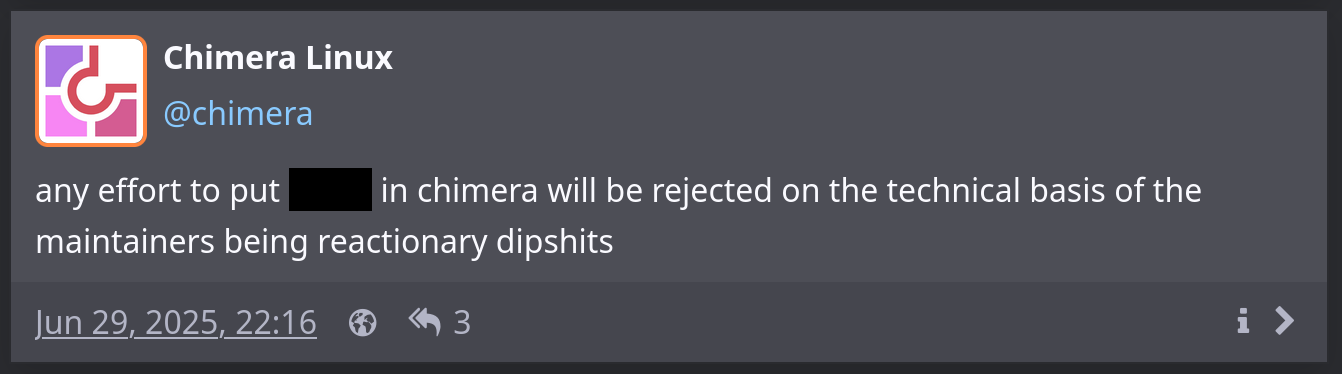
Today, we’re looking at two case studies in how to respond when reactionaries appear in your free software community.
Exhibit AIt is a technical decision.
The technical reason is that the security team does not have the bandwidth to provide lifecycle maintenance for multiple X server implementations. Part of the reason for moving X from main to community was to reduce the burden on the security team for long-term maintenance of X. Additionally, nobody so far on the security team has expressed any interest in collaborating with xxxxxx on security concerns.
We have a working relationship with Freedesktop already, while we would have...
Some fun engineering advice blog
Found a link toward this fun, but very wise, huh... blog, I guess? I don't know.
Maybe there is a better forum category for this, if so, please move the thread accordingly.
Anyway, here's the link: https://grugbrain.dev
Enjoy!
Do old-style version numbers still make sense?
Long before the endless scroll of release notes and automatic updates, software came packaged in physical media: floppies, CDs, DVDs. Version numbers were lovingly crafted — Version 3.5.2 meant something (at least to those of us who still remember writing it on a floppy label ;)). It signaled a hier…
Unionize or die
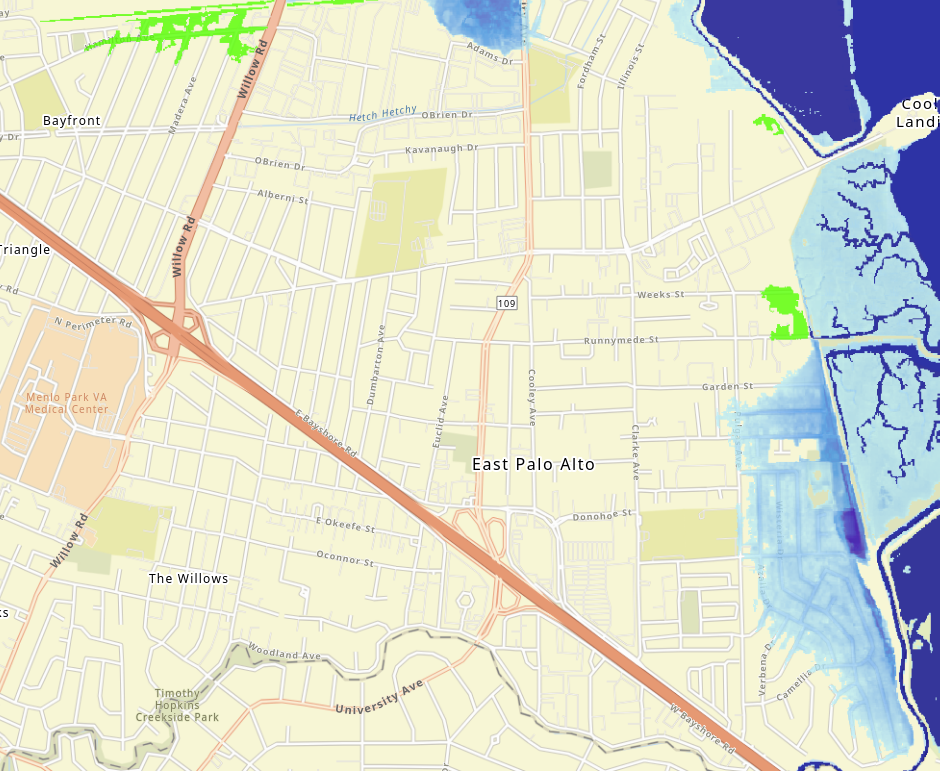
Tech workers have long resisted the suggestion that we should be organized into unions. The topic is consistently met with a cold reception by tech workers when it is raised, and no big tech workforce is meaningfully organized. This is a fatal mistake – and I don’t mean “fatal” in the figurative sense. Tech workers, it’s time for you to unionize, and strike, or you and your loved ones are literally going to die.
In this article I will justify this statement and show that it is clearly not hyperbolic. I will explain exactly what you need to do, and how...
The British Airways position on various border disputes
My spouse and I are on vacation in Japan, spending half our time seeing the sights and the other half working remotely and enjoying the experience of living in a different place for a while. To get here, we flew on British Airways from London to Tokyo, and I entertained myself on the long flight by browsing the interactive flight map on the back of my neighbor’s seat and trying to figure out how the poor developer who implemented this map solved the thorny problems that displaying a world map implies.
I began my survey by poking through the whole interface...
2025-05-05
On Sunday, 2025-05-11 there will be scheduled maintenance of the suckless servers. It's estimated this will take about 2 hours from about 10:00 to 12:00 UTC.
The mailinglist, website and source-code repositories will have some downtime.
Update: the maintenance was finished at 2025-05-11 13:00 UTC. There was a small issue with storage space, hence the 1h delay for fixing it.