Feed linux for devices [copy] http://www.linuxfordevices.com/rss-feeds-1.xml has loading error: cURL error 22: The requested URL returned error: 404
Feed Music Hackspace [copy] http://musichackspace.org/feed/rss/ has loading error: A feed could not be found at `https://musichackspace.org/feed/`. Empty body.
Feed SparkFun Electronics [copy] http://www.sparkfun.com/feeds/news has loading error: cURL error 22: The requested URL returned error: 405
Feed The RFID Weblog [copy] http://www.rfid-weblog.com/index.rss has loading error: cURL error 22: The requested URL returned error: 404 Not Found
Rockchip RK3506J-based Forlinx FCU1501 fanless industrial IoT gateway offers dual Ethernet, plenty of I/Os and serial interfaces

Forlinx Technology has recently introduced the FCU1501, a rugged, fanless industrial embedded computer and IoT gateway built around the Rockchip RK3506J processor with a tri-core Cortex-A7 and a single Cortex-M0 core. The system is designed for high-reliability data acquisition and protocol conversion in harsh environments. The gateway comes in two variants (basic and extended), which have similar dimensions but differ mainly in interface density. Both models feature up to 512MB DDR3 RAM, 8GB eMMC flash, dual Fast Ethernet, dual-band Wi-Fi & Bluetooth 5.0, and 4G LTE Cat 1 support. Applications include automation, rail transit, and smart manufacturing. The system supports a wide...
Seeed Studio reTerminal D1001 Targets HMI Systems with ESP32-P4 and Integrated Display
Seeed Studio has launched an 8-inch HMI device combining a touch display, wireless connectivity, and multimedia hardware in a single platform. The reTerminal D1001 pairs an ESP32-P4 with an ESP32-C6 for networking, along with a 6-axis IMU for motion sensing. The system is powered by the ESP32-P4NRW32, a dual-core RISC-V processor operating at up to […]
T-Display-P4 smartphone-like devkit features ESP32-P4 MCU, ESP32-C6 wireless SoC, and SX1262/LR2021 LoRa transceiver

LILYGO T-Display-P4 is a feature-rich ESP32-P4 + ESP32-C6 devkit, but with a smartphone-like design and support for GPS, Ethernet, and LoRaWAN through SX1262 or LR2021 LoRa transceiver, besides the usual WiFi 6, Bluetooth 5.x, and 802.15.4 wireless connectivity. The T-Display-P4 is offered with either a 4.05-inch IPS display and a 2MP front-facing camera or a 4.1-inch AMOLED with a 2MP rear camera. The devkit is equipped with 32MB PSRAM and 16MB NOR flash for the ESP32-P4, a microSD card slot, a built-in microphone and speaker, a 3.5mm audio jack, a few USB ports, and a 9-axis motion sensor, as well...
AWOL Vision Aetherion – A 4K ultra short throw RGB laser projector with VRR and 3300 ISO lumens (Crowdfunding)

The AWOL Vision Aetherion is a new Ultra Short Throw (UST) 4K Android TV 14 projector built around the MediaTek MT9655 TV SoC. Additionally, the projector includes 8GB of RAM, 128GB of storage, and 2.5GbE networking for high-bitrate local media streaming. The projector is available in two variants, Aetherion Pro and Max, with the main difference being brightness. Other than that, it features a 6000:1 native contrast ratio, up to 3300 ISO lumens (for the Max model) of brightness, and covers 110% of the Rec. 2020 color gamut. It uses a triple RGB laser light with PixelLock optics for edge-to-edge...
Select the right hardware for your local LLM deployment with this online guide

When it comes to deploying local LLMs, many people may think that spending more money will deliver more performance, but it’s far from reality. That’s why Sipeed created the “AI Agent Local LLM Inference Device Deployment Guide” hosted on the llmdev.guide website. The website lists common hardware with price, performance (tokens/s), power consumption, and more for various LLMs. If we take Qwen3.5 9B as an example, we can see that $4K+ hardware like NVIDIA DGX Spark or Apple Mac Studio M3 delivers about the same TPS as a machine equipped with a $260 Intel Arc B580 12GB GPU. If money...
FLiP Multicore Module Rev B Adds USB-C and Expanded Power Input
California-based Parallax Inc. has released Revision B of its FLiP Multicore Module, updating the design with USB-C connectivity, a wider input voltage range, and additional identification features. The module is built around the Propeller P8X32A, an 8-core microcontroller with 32 general-purpose I/O pins. It operates with a 5 MHz oscillator and can run at frequencies […]
DIY ESP32-S3 Internet radio features Winamp-styled user interface

Volos Projects recently showcased an easy-to-reproduce, inexpensive DIY ESP32-S3 Internet radio based on a Waveshare ESP32-S3-LCD-1.54 development board and an Arduino sketch with a Winamp-styled user interface. As its name implies, the hardware is based on the ESP32-S3 WiFi and Bluetooth SoC, connected to a 1.54-inch 240×240 color display and a speaker that delivers better-than-expected audio quality, according to Volos Projects. Waveshare ESP32-S3-LCD-1.54 specifications: SoC – Espressif ESP32-S3R8 CPU – Dual-core Tensilica LX7 microcontroller up to 240 MHz with vector instructions for AI acceleration Memory – 512KB SRAM, 8MB PSRAM Wireless – WiFi 4 and Bluetooth 5.0 LE + Mesh...
PineTime Pro smartwatch to feature dual-core Cortex-M33 MCU, 2.13-inch AMOLED, GPS, and more

Pine64 has announced progress on the PineTime Pro smartwatch, powered by a dual-core Cortex-M33 microcontroller with Bluetooth 5.2 Classic and LE and 800KB SRAM. The watch also features a 2.13-inch AMOLED display, GPS support, a heart rate monitor, and a 6-axis motion sensor. It’s an upgrade to the PineTime project unveiled in September 2019, and one of the most popular Pine64 devices thanks to open-source software projects such as InfiniTime firmware. For reference, the PineTime ships with a Nordic nRF52 Arm Cortex-M4 Bluetooth MCU with 64 KB SRAM, a 1.3-inch IPS display, and basic HRM and accelerometer. The PineTime Pro...
The rise and fall of IBM's 4 Pi aerospace computers: an illustrated history
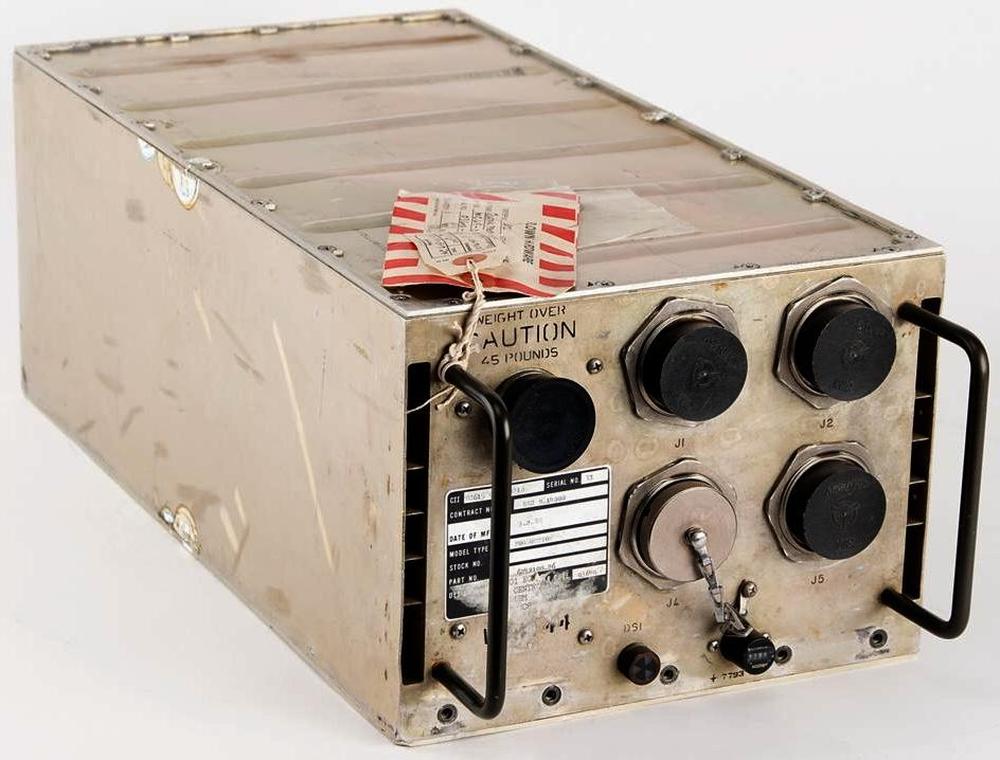
The morning of April 12, 1981, 20 years to the day after Yuri Gagarin became the first person in space, the Space Shuttle thundered into the Florida sky. Commander Young and Pilot Crippen were at the controls as the Shuttle ascended on its first flight. But the launch, like much of the flight, was really under the control of four computers in the avionics bays one deck below the crew. A fifth computer stood ready to take over in case of a catastrophic computer malfunction. These computers, Model AP-101B, were part of IBM's System/4 Pi family.
The Space Shuttle AP-101B computer. This unit flew on multiple...Jetway F35-ARU1 Combines Core Ultra SoC in 3.5-inch Form Factor
Jetway has shared early details of the F35-ARU1, a 3.5-inch subcompact board based on Intel Core Ultra processors from the Arrow Lake-U series. The board integrates CPU, GPU, and NPU resources within a low-power platform intended for embedded and industrial systems. The system is offered with Intel Core Ultra 5 225U or Core Ultra 7 […]