Feed Crystalfontz [copy] https://www.crystalfontz.com/blog/feed/ has loading error: A feed could not be found at `https://www.crystalfontz.com/blog/feed/`; the status code is `200` and content-type is `text/html; charset=UTF-8`
Feed linux for devices [copy] http://www.linuxfordevices.com/rss-feeds-1.xml has loading error: cURL error 22: The requested URL returned error: 404
Feed marsohod.org [copy] https://marsohod.org/component/ninjarsssyndicator/?feed_id=1&format=raw has loading error: cURL error 22: The requested URL returned error: 500
Feed Music Hackspace [copy] http://musichackspace.org/feed/rss/ has loading error: cURL error 22: The requested URL returned error: 404
Feed SparkFun Electronics [copy] http://www.sparkfun.com/feeds/news has loading error: cURL error 22: The requested URL returned error: 405
Feed Technoblogy [copy] http://www.technoblogy.com/rss?KVM+3 has loading error: cURL error 22: The requested URL returned error: 503 Service Unavailable
Feed VCFB Newsfeed [copy] https://vcfb.de/rss.xml has loading error: cURL error 60: SSL certificate problem: self signed certificate in certificate chain
A USB interface to the "Mother of All Demos" keyset
https://invidious.privacyredirect.com/watch?v=DpshKBKt_os
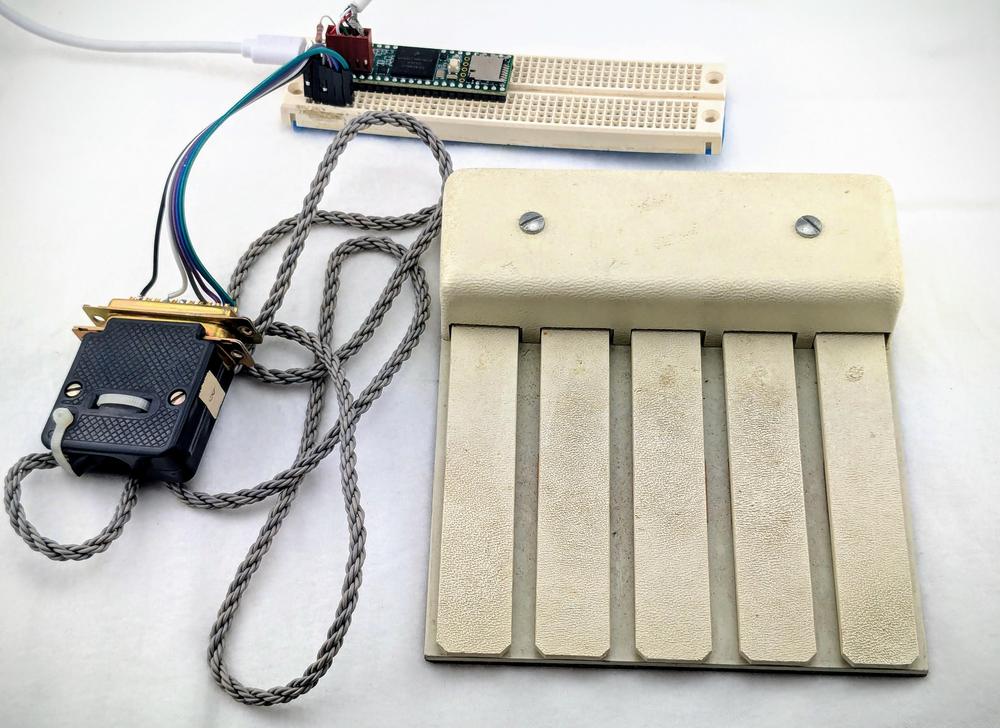
In the early 1960s, Douglas Engelbart started investigating how computers could augment human intelligence: "If, in your office, you as an intellectual worker were supplied with a computer display backed up by a computer that was alive for you all day and was instantly responsive to every action you had, how much value could you derive from that?" Engelbart developed many features of modern computing that we now take for granted: the mouse,1 hypertext, shared documents, windows, and a graphical user interface. At the 1968 Joint Computer Conference, Engelbart demonstrated these innovations in a groundbreaking presentation, now known as "The Mother of All Demos."
The keyset with...Comments to USTR Opposing Tariffs and Tariff Increases
The United States Trade Representative invited comments from the public this past month to assist them in making recommendations about how to address so-called “unfair trade practices by other countries” and “non-reciprocal trade relationships”. This is the public comment I left today on the USTR docket. I have also submitted similar comments to my senators and representative in Congress.
“I am deeply alarmed by the Trump administration’s decision last week to impose tariffs on Canadian and Mexican goods, as well as further increase tariffs on imports from China. As the CEO of Great Scott Gadgets, a small Colorado-based business that designs,...
Robotron S6130 — Восставший из мертвых

История ремонта этой пишущей машинки тянется уже 8 лет! Шутка что ли, это Самый Первый Артефакт моего YouTube-канала!
Robotron S6130 — многофункциональная пишущая машинка формата A2 на базе процессора Z80, с функцией запоминания набранных текстов во встроенной оперативной памяти, с записью и воспроизведением на магнитофон, а также возможностью приема и передачи текстов с ЭВМ по последовательному порту!
Но, перед тем как появиться у меня, агрегат порядка четырех лет пролежал в сыром, заброшенном помещении на горе заплесневевших книг. За это время питающая ОЗУ резервная батарейка протекла и пожрала дорожки на материнской плате. Коррозией покрылись и ноги ближайших микросхем, ОЗУ. Разумеется, на первом...
The Pentium contains a complicated circuit to multiply by three
This article is available in German at Heise Online.
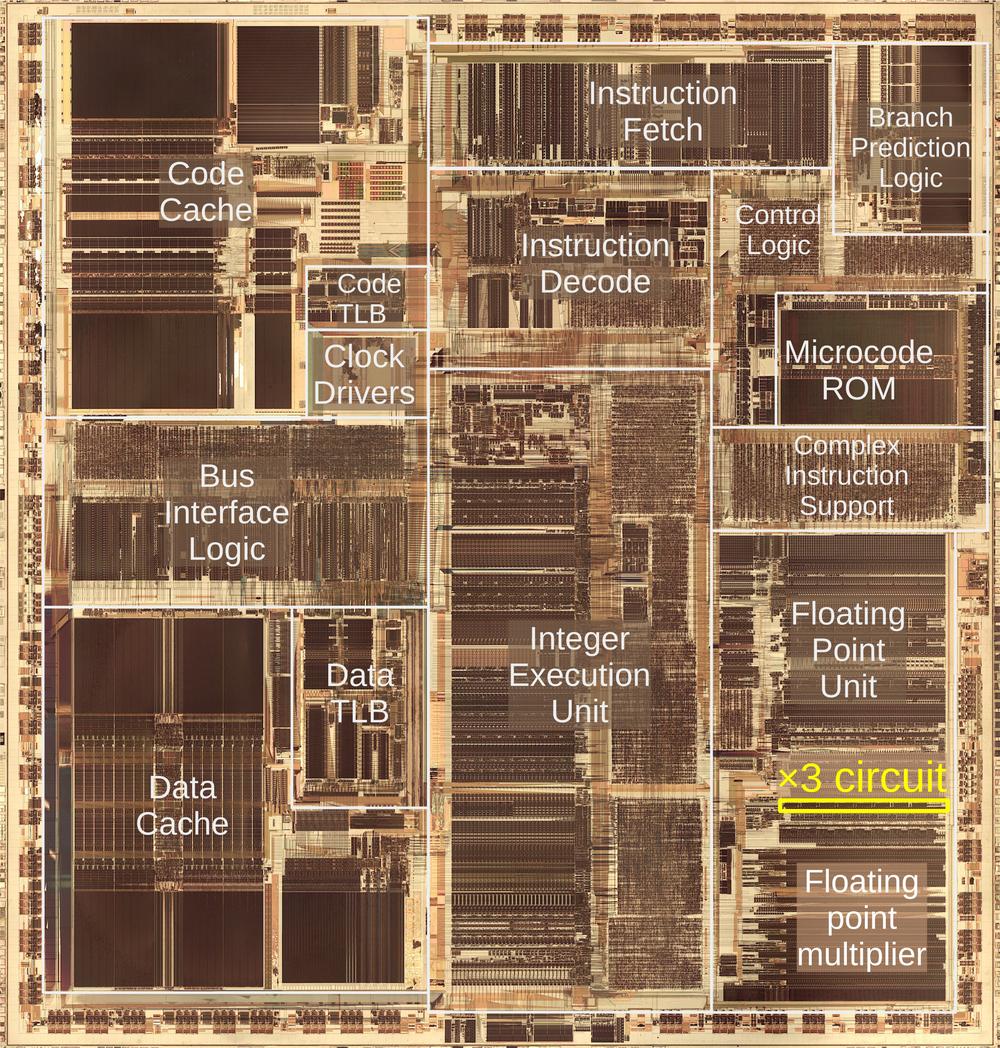
In 1993, Intel released the high-performance Pentium processor, the start of the long-running Pentium line. I've been examining the Pentium's circuitry in detail and I came across a circuit to multiply by three, a complex circuit with thousands of transistors. Why does the Pentium have a circuit to multiply specifically by three? Why is it so complicated? In this article, I examine this multiplier—which I'll call the ×3 circuit—and explain its purpose and how it is implemented.
It turns out that this multiplier is a small part of the Pentium's floating-point multiplier circuit. In particular, the...
Emulating a PS5 Controller with Cynthion
https://www.youtube-nocookie.com/embed/MMZAyQuZHvs
We’ve recently published the second video in our Cynthion training series, so if you want to go deeper into exploring and experimenting with USB, this is for you. In this video, Martin explains the basics and evolution of Facedancer and demonstrates how to use Cynthion and Facedancer to emulate a PS5 controller. If you haven’t already, check out the first video- Sniffing PS5 Controller Packets with Cynthion.
Repurposing Cisco power supplies
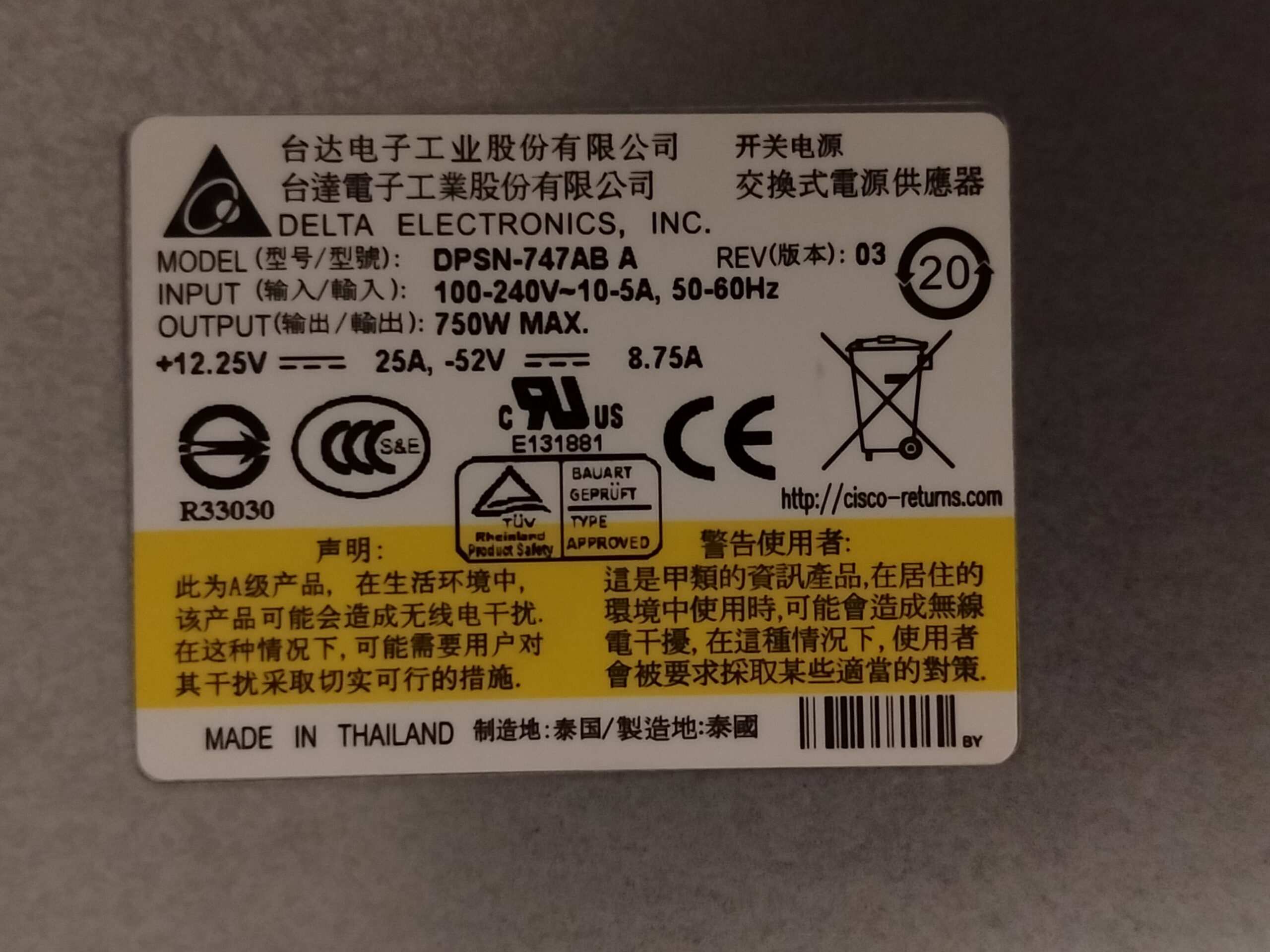
Sometimes you can find a good deal on used power supply from various vendors. In my case it was Cisco C3K-PWR-750WAC and RPS 2300. The problem is, that they don’t output any voltage until they are plugged into device. The question is, how to fool them into thinking they are plugged in. Update: including N2200-PAC-400W
The spec for the supply looks good:
And the interface is following:
You can see, there are some huge terminals which will obviously be power output and then 16 2.54mm pins where the detection will most likely happen. I was thinking how to find out which pins are...
Chinese PoE extractor teardown
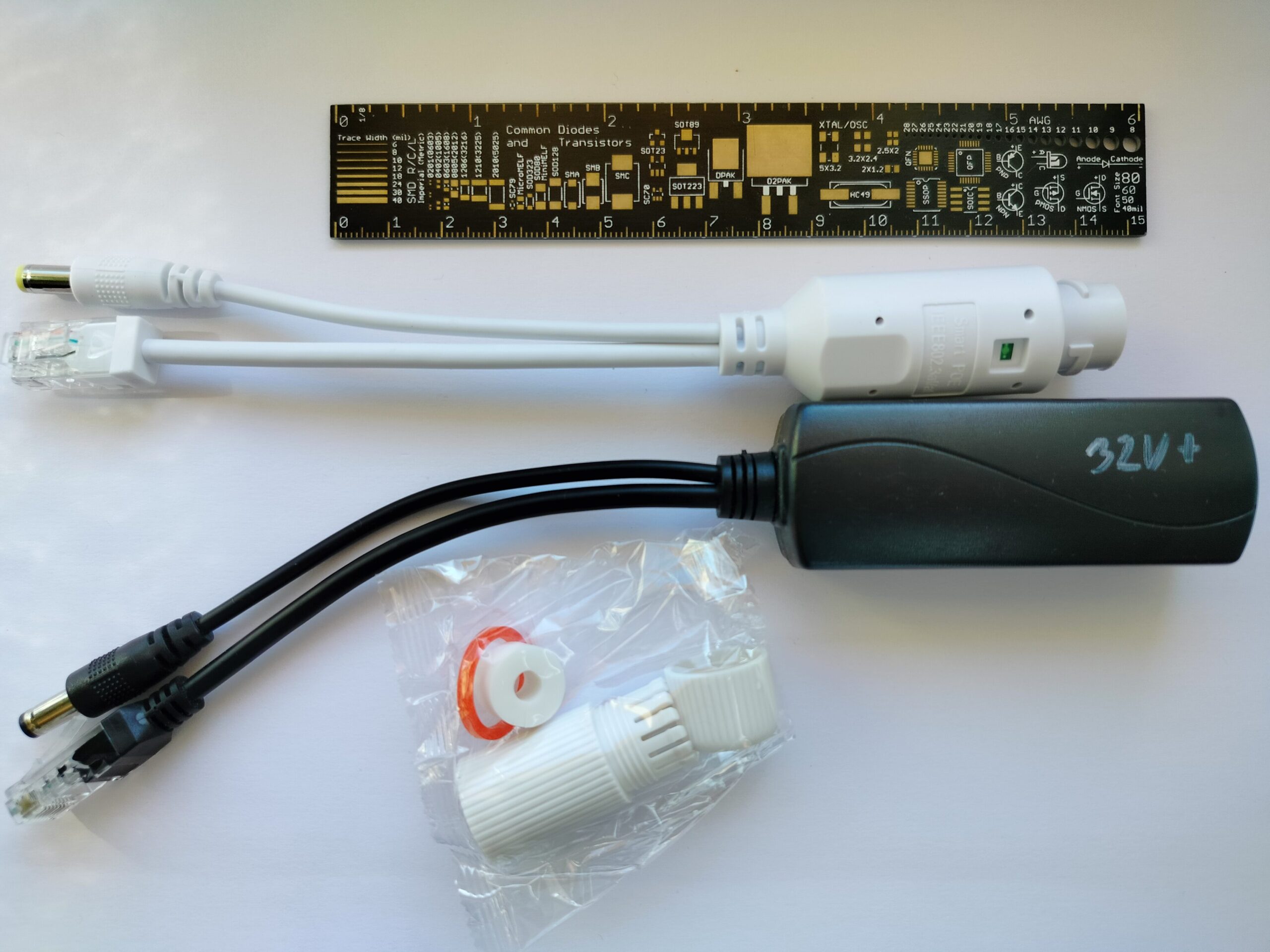
I needed to power some cameras using Power over Ethernet but they only supported 12V input, so I ordered some PoE extractors from ali. Here they are for your information.
Black one White waterproof one ConclusionThey both only support 100Mbps over 2 pairs. The wateproofing was quite annoying to remove but not impossible. It seems they both can be modified to support different input/output voltage. As you can see in the pictures, they are both using H6225K step-down regulator in a very similar design.
The circuit mostly corresponds to following schematic found on the internet:
Thank you for your attention.
January Update: Thinking Out Of The Vox

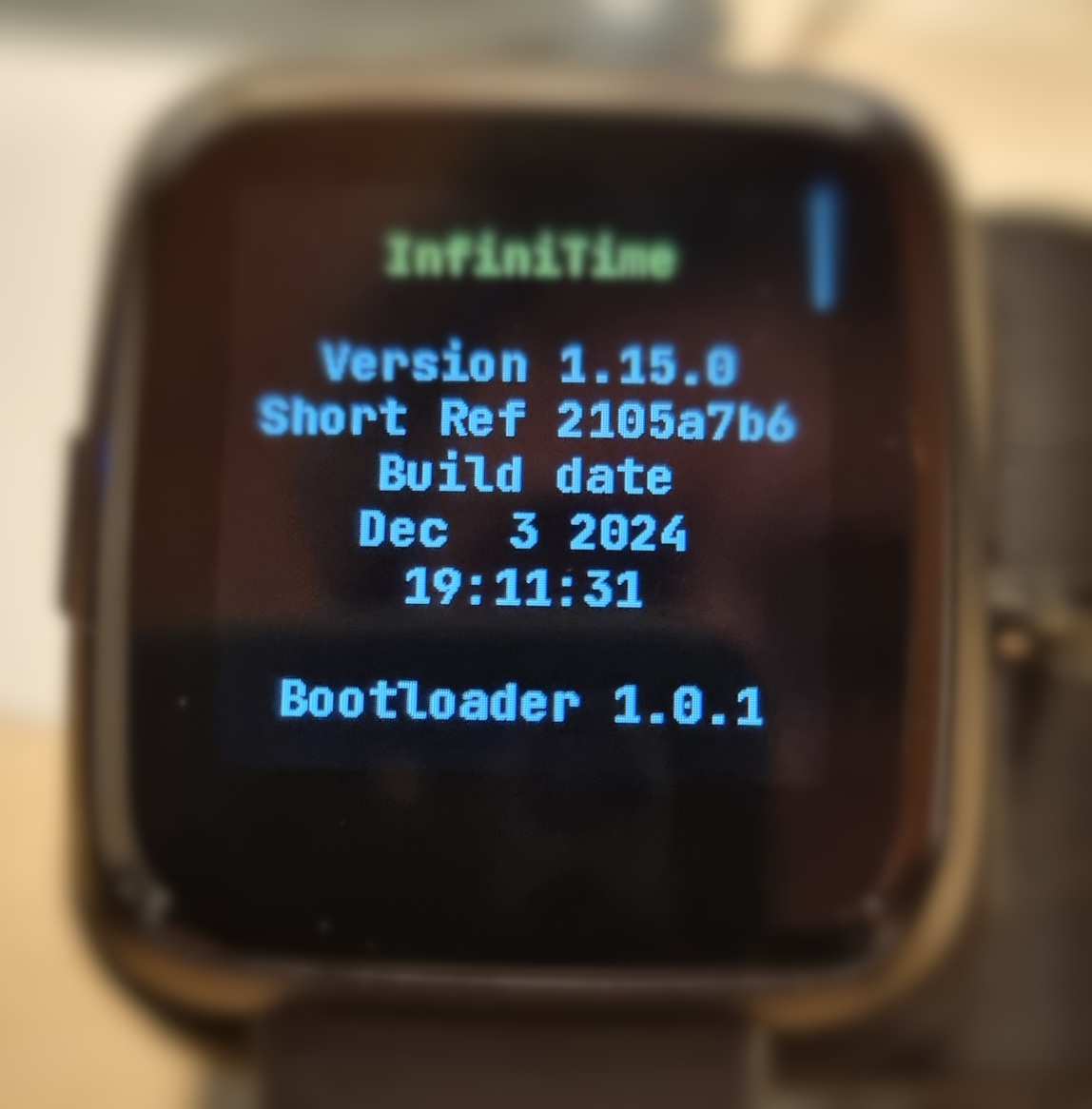
This month we report on some news concerning the PineVox, what the community have been up to with their PineNotes and the brand-new 1.15 InfiniTime update. We would like to wish our community a happy New Year and hope you all had a good end of 2024.
But since it’s now the beginning of 2025, we’d like to fill you in on what we have planned for the first part of the year.
We plan to release the PineVox to the public thanks to Gamiee’s recent progress and we plan to continue improving the software for the PineNote, thanks to Maximilian, Diederik...
Please refrain from installing WASP-OS on new PineTimes for the moment
In July 2024, PineStore notified the community that a small hardware change was needed on the PineTime: the current flash chip was end of life (EoL) and needed to be replaced by a new one. From the software point of view, the new chip behaves exactly like the old on so very few code changes were required to support it.
The new chip exposes different identifiers (manufacturer ID, for example) than the previous one. Which means that if the software checks those IDs, it would need to be updated to take the new ones into account.
No change was needed in InfiniTime,...
Free Stuff - September 2024
The belated September 2024 recipient for the Great Scott Gadgets Free Stuff Program is Allen Paschel of Orlando, Florida in the United States. Allen is the president of The Maker Effect Foundation which exists to inspire everyone to create! The Maker Effect Foundation is a non-profit organization that runs a maker space and teaches classes at schools, libraries, and events. The maker space has CNC machines, laser etcher/cutters, 3D Printers, vacuum forming equipment, welding tools, electronic tools, and other arts tools. Soon they will be able to add software-defined radio to that list of tools as we are sending them...