Feed linux for devices [copy] http://www.linuxfordevices.com/rss-feeds-1.xml has loading error: cURL error 22: The requested URL returned error: 404
Feed SparkFun Electronics [copy] http://www.sparkfun.com/feeds/news has loading error: cURL error 22: The requested URL returned error: 405
Feed The RFID Weblog [copy] http://www.rfid-weblog.com/index.rss has loading error: cURL error 22: The requested URL returned error: 404 Not Found
Book Explores ELBE Workflows for Embedded Linux Systems
A new book titled Building Embedded Systems with Raspberry Pi, Linux, and ELBE by Krishna Pattabiraman describes approaches for developing reproducible Debian-based embedded Linux systems using the ELBE build environment. The content focuses on structured system design, image generation, and long-term maintainability for Raspberry Pi–based platforms. The content targets developers working on production-oriented systems, with […]
DietPi March 2026 Update Adds Immich, uv, and RustDesk Client
The March release of DietPi v10.2 introduces new software options including Immich, uv, and the RustDesk Client, along with a range of enhancements and bug fixes across supported single-board computers. DietPi: DietPi is a lightweight, Debian-based operating system optimized for single-board computers and embedded devices. It focuses on minimal resource usage while providing automation utilities […]
LooperRobotics Insight 9 standalone spatial AI camera features D-Robotics RDK X5 SoC, supports ROS 2 (Crowdfunding)

LooperRobotics Insight 9 is an autonomous plug-and-play spatial AI camera designed for embodied intelligence, quadruped robots, and dynamic mobile platforms. Compared to typical USB depth cameras like Intel RealSense D435i or Luxonis OAK-D, which rely on a host PC for processing, the Insight 9 integrates a D-Robotics RDK X5 octa-core Cortex-A55 processor with a 10 TOPS AI accelerator, allowing it to run Visual SLAM (V-SLAM) and depth mapping entirely on-device. The camera features a “Tri-Eye Perception Matrix,” which includes an 8.4MP Sony Starvis IMX415 RGB sensor with an ultra-wide 188° field of view, and two SmartSens SG0132 global shutter sensors for stereoscopic...
Using FireWire on a Raspberry Pi

After learning Apple killed off FireWire (IEEE 1394) support in macOS 26 Tahoe, I started looking at alternatives for old FireWire equipment like hard drives, DV cameras, and A/V gear.
I own an old Canon GL1 camera, with a 'DV' port. I could plug that into an old Mac (like the dual G4 MDD above) with FireWire—or even a modern Mac running macOS < 26, with some dongles—and transfer digital video footage between the camera and an application like Final Cut Pro.
Upcoming ESP32-S31 dual-core RISC-V MCU offers Gigabit Ethernet, WiFi, Bluetooth, and 802.15.4 connectivity

It looks like Espressif Systems has a new powerful wireless microcontroller in the works, with the ESP32-S31 sharing some features of the ESP32-P4 and ESP32-S3 microcontrollers. The ESP32-S31 is a dual-core RISC-V MCU with one high-performance core with FPU and SIMD instructions, and one low-power RISC-V core, featuring 62 GPIOs, a Gigabit Ethernet MAC, WiFi, Bluetooth, and 802.15.4 (Thread/Zigbee/Matter) wireless connectivity, and more. ESP32-S31 preliminary specifications: MCU subsystem RISC-V HP (High-performance) RV32IMAFCP CPU @ 320 MHz with FPU, SIMD, etc. RISC-V LP (Low-power) MCU core Memory & Storage I/F 512 KB SRAM 32 KB RTC SRAM Support for external octal...
MINIX Mini-PC Leverages AMD Ryzen AI Max+ 395
MINIX is offering the ER939-AI, a compact mini PC built around AMD’s Ryzen AI Max+ 395 processor. The system targets high-performance desktop workloads in a small form factor, combining a 16-core CPU, integrated graphics, and an on-chip neural processing unit. The platform uses the Ryzen AI Max+ 395, a 16-core, 32-thread processor with boost frequencies […]
FOSDEM 2026 Update
Hey again RSS readers (love y’all). In this update we share what we discussed at FOSDEM (PinePhone 2, community editions, DRAM shortage), what we demoed at our stand at FOSDEM and details on the PineTime Pro. Next month will have the main community update.
BIO: The Bao I/O Coprocessor
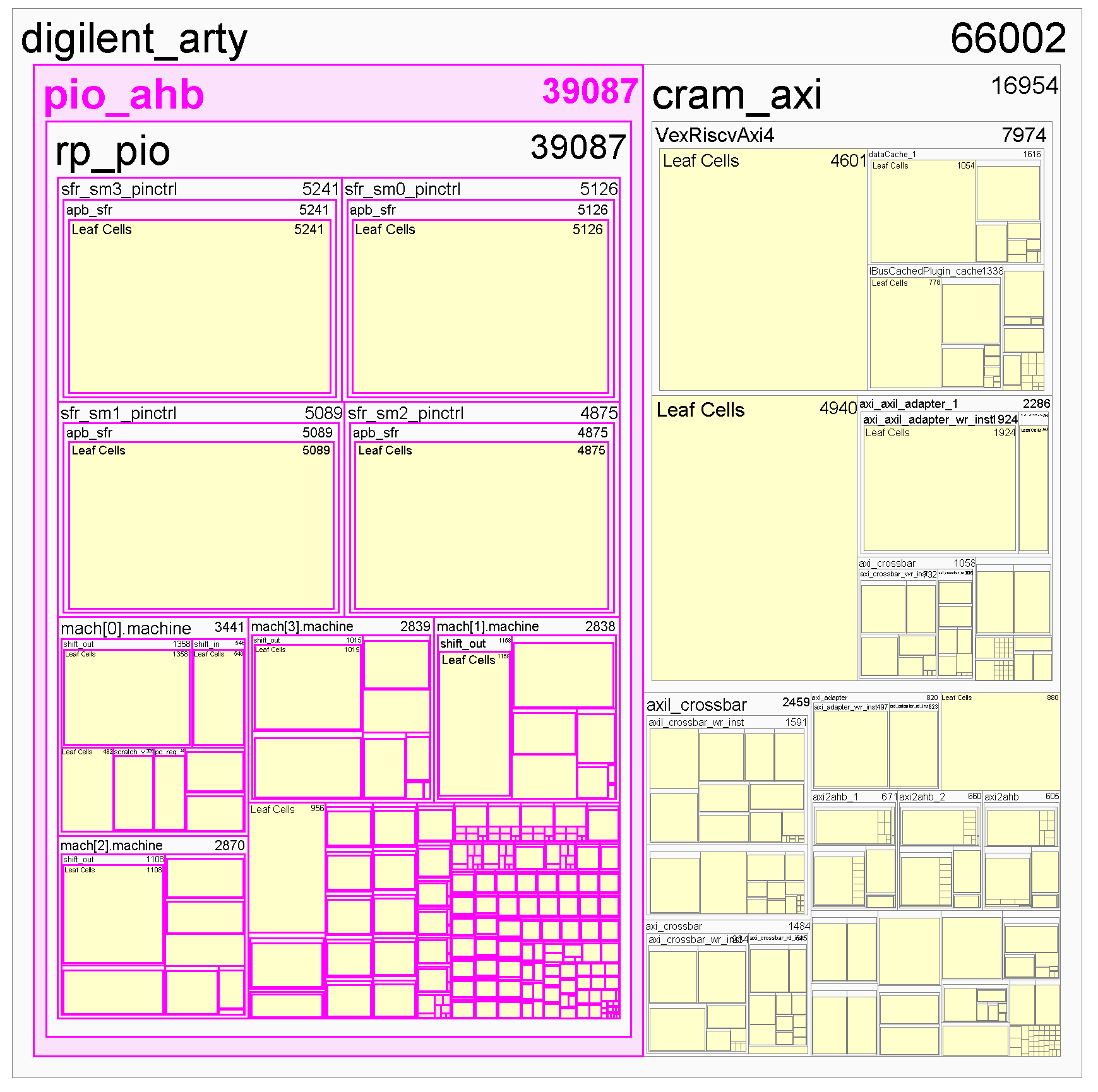
BIO is the I/O co-processor in the Baochip-1x, a mostly open source 22nm SoC I helped design. You can read more about the Baochip-1x’s background here, or pick up an evaluation board at Crowd Supply.
In this post, I’ll talk about the origins of the BIO, starting by working through a detailed study of the Raspberry Pi PIO as a reference, before diving into the architecture of the BIO. I’ll then work through three programming examples of the BIO, two in assembly and one in C. If all you’re interested in is how to use the BIO, you can skip the...
The best laptop Apple ever made
Today I posted a video titled The best laptop Apple ever made, and tl;dw1 it's the 11" MacBook Air.
I acknowledge in the video my pick is slightly subjective, and I also asked a number of other YouTubers which Mac laptop they consider the best (or at least most influential). If you don't want to watch the video, I'll summarize their choices here:
Радио почти из ничего — самодельные радиодетали 1920-х годов. Резисторы

Рассматривая любительские рукодельные электронные лампы, например, [1, 2], интересно и полезно будет вспомнить и об остальных радиоэлементах, изготовлять которые ранним любителям приходилось самостоятельно и собственноручно. Кроме естественных корпусов-ящиков и контурных катушек, дросселей, трансформаторов, коллеги-предки часто были вынуждены делать и почти всё остальное — как установочные элементы — ручки, верньеры, шкалы, клеммы, включатели-переключатели, ламповые панельки, так и радиоэлементы пассивные — резисторы и конденсаторы переменные и постоянные, диоды (детекторы и выпрямители), элементы питания, в том числе и анодные (а это на минуточку — 40…80 вольт!) батареи.
Добавим — всё это предлагалось собирать обычному увлечённому гражданину, юношеству, часто школьнику и из самых чепуховых, буквально подножных...