Feed linux for devices [copy] http://www.linuxfordevices.com/rss-feeds-1.xml has loading error: cURL error 22: The requested URL returned error: 404
Feed SparkFun Electronics [copy] http://www.sparkfun.com/feeds/news has loading error: cURL error 22: The requested URL returned error: 405
Feed The RFID Weblog [copy] http://www.rfid-weblog.com/index.rss has loading error: cURL error 22: The requested URL returned error: 404 Not Found
GL.iNet Comet 5G – A KVM over IP solution with 5G RedCap cellular connectivity, 3.69-inch touchscreen display

GL.inet Comet 5G (GL-RM10RC) is a KVM over IP solution with a 3.69-inch touchscreen display and 5G RedCap (Reduced Capability) IoT cellular connectivity, enabling remote access even when your regular Internet connection is down. The design builds upon the GL.iNet Comet Pro introduced last year, featuring a larger design and display, and adding 5G cellular connectivity on top of WiFi 6 and Gigabit Ethernet. It still features HDMI input and output (loop) ports, two USB Type-C ports for power and keyboard/mouse emulation, and a USB 2.0 port for accessories like ATX power control or fingerbot for the control of physical...
Magnetic Levitation using an Induction Cooktop
https://invidious.privacyredirect.com/watch?v=i5uTs67MwlU
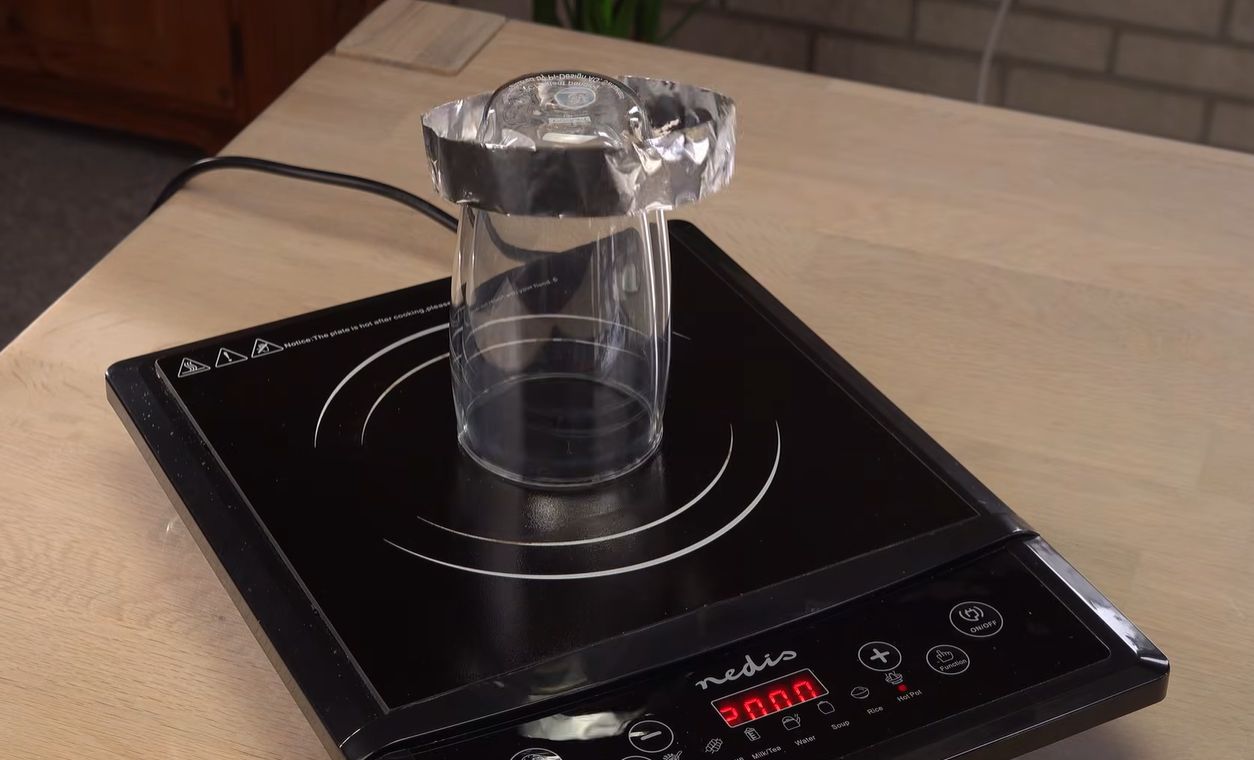
Adding another item on the list of things you probably shouldn’t be trying at home, we got [Brainiac75] giving magnetic levitation a shot using an unmodified induction cooktop and aluminium foil. Although not ferromagnetic, it turns out that aluminium can be made to do interesting things in the magnetic field created by the powerful electromagnet that underlies the induction principle.
Interestingly, although there’s a detection circuit in these units that should detect the presence of an appropriate (ferromagnetic) object, it appears that even a thin sheet of aluminium foil can completely deceive it. The effect is that of a force pushing...
2026 Hackaday Europe: First Round of Speakers Announced!

Hackaday Europe is the continental version of the Ultimate Hardware Conference, taking place May 16th and 17th, and you need to be there! We’ll continue to announce speakers and workshops over the next couple weeks, because we got so many more great talks than we had anticipated that we’re negotiating for extra time.
This year, we’re moving to a new venue in Lecco, Italy, and it’s sure to be fantastic. Get your tickets now before it’s too late. And stay tuned for another round of talk reveals next week!
Suryansh SharmaTest. Fly. Survive. Building High Endurance Drones For The Outside World.
Every...
AMD EPYC Embedded 8004 eATX motherboard supports up to 576GB DDR5 memory for Edge AI applications

IBASE Technology MBB1002 eATX (Extended ATX) motherboard is powered by AMD EPYC Embedded 8004 series processors and takes up to 576GB DDR5-4800 ECC memory for next-generation edge AI and data-intensive applications in manufacturing, transportation, and edge computing infrastructure. The “embedded” motherboard features five PCIe Gen5 x16 slots for integrating various GPUs and AI accelerators, dual 10GbE networking, NVMe and SATA storage, and USB 3.2 ports with PDPC (Peripheral Device Power Control). IBASE MBB1002 specifications: SoC – AMD EPYC Embedded 8004 series processor with up to 64x Zen4 cores (128 threads) via AMD SP6 LGA 4844 socket System Memory – Up...
Thermostat? Do It With a 555!
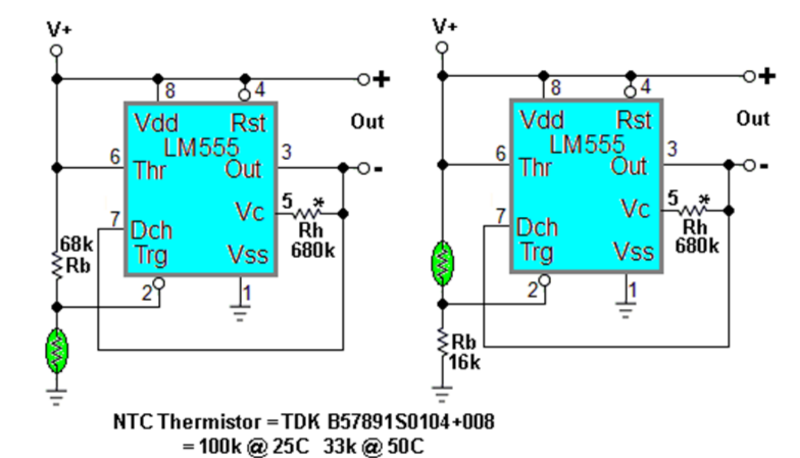
It is a running gag around here that whenever a project posts, someone will inevitably point out that it could have been done with a 555 timer IC. [Stephen Woodward] went the opposite way and built a simple thermostat using the ubiquitous chip.
To be fair, this isn’t some sophisticated PID controller — it’s basically a bang-bang controller. Since the device has a comparator and the circuits use a thermistor, it seems like a clever but simple idea on the surface. However, there are some neat tricks. For example, if you tie the 555 threshold pin to Vdd, then the trigger...
CCA Ethernet Cables: Not Up To Scratch, But Are They Dangerous?
https://invidious.privacyredirect.com/watch?v=RfnHX61wvRQ

If you’ve ever bought a suspiciously cheap Ethernet cable from an online listing, there’s a decent chance you’ve encountered Copper Clad Aluminum. Better known as CCA, it’s exactly what it sounds like—an aluminium conductor with a thin skin of copper deposited on the outside. Externally, cables made with this material look largely like any other, with perhaps the only obvious tell being that they feel somewhat lighter in the hand.
CCA is cheaper than proper copper cabling, and it conducts signals well enough to function in an Ethernet cable. And yet, it’s a prime example of corner-cutting that keeps standards bodies...
Foenix Labs A2560Me Brings MC68LC060 CPU, FPGA Graphics, and PCIe Expansion
Foenix Labs’ A2560Me is a Mini-ITX motherboard built around the Motorola MC68LC060 processor and designed as an updated version of the earlier A2560M platform. The system combines a legacy 68k CPU architecture with FPGA-based subsystems and more recent interfaces such as PCIe and DDR3 memory. The A2560Me uses a 32-bit MC68LC060RC66 processor alongside a Xilinx […]
SN1 Solar Node – An ESP32-C3-based board with IP67 enclosure, solar charging, ESPHome firmware

Designed by Granz Scientific LLC, the SN1 Solar Node is an ESP32-C3-based IoT node/development board designed specifically for off-grid IoT projects. Development boards like Seeed Studio Wio Tracker, or industrial controllers like DFRobot LoRaWAN Control Terminal, allow you to handle your own battery management and weatherproofing, or on the other end, you have products like SenseCAP Solar Node P1 that come with everything integrated but do not allow adding custom hardware. This is where the SN1 Solar Node is different; it features an IP67-rated enclosure with an integrated solar panel on the lid, 18650 battery support, and prototyping strip-board areas...
The Heat Island Effect is Warming Up the AI Data Center Controversy

There’s been a lot of virtual ink spilled in environmental circles about the cooling water requirements of data centers, but less consideration of what happens with all the heat coming out of these buildings. Naturally, it’s going to warm the surrounding environment, but how much? Around 2 C (3.6 F) on average, and potentially much more than that, according to a recent study on the data heat island effect.
It’s common sense, of course: heat removed from the data center doesn’t go away. That heat might go into a body of water if one is available, but otherwise it’s out into...
wolfIP – An open-source, lightweight TCP/IP stack with no dynamic memory allocations for embedded systems

Better known for its open-source wolfSSL SSL/TLS library, wolfSSL (the company) has now released the wolfIP open-source, lightweight TCP/IP stack with no dynamic memory allocations (e.g., no malloc calls) designed for resource-constrained embedded systems.
The company highlights that wolfIP "supports both endpoint-only mode and full multi-interface support with optional IP forwarding. By default, it operates as a network endpoint, but can be configured to forward traffic between multiple network interfaces".
The post wolfIP – An open-source, lightweight TCP/IP stack with no dynamic memory allocations for embedded systems appeared first on CNX Software - Embedded Systems News.