Feed linux for devices [copy] http://www.linuxfordevices.com/rss-feeds-1.xml has loading error: cURL error 22: The requested URL returned error: 404
Feed SparkFun Electronics [copy] http://www.sparkfun.com/feeds/news has loading error: cURL error 22: The requested URL returned error: 405
Feed The RFID Weblog [copy] http://www.rfid-weblog.com/index.rss has loading error: cURL error 22: The requested URL returned error: 404 Not Found
Printed Sleeve Gives Keys Some Grip
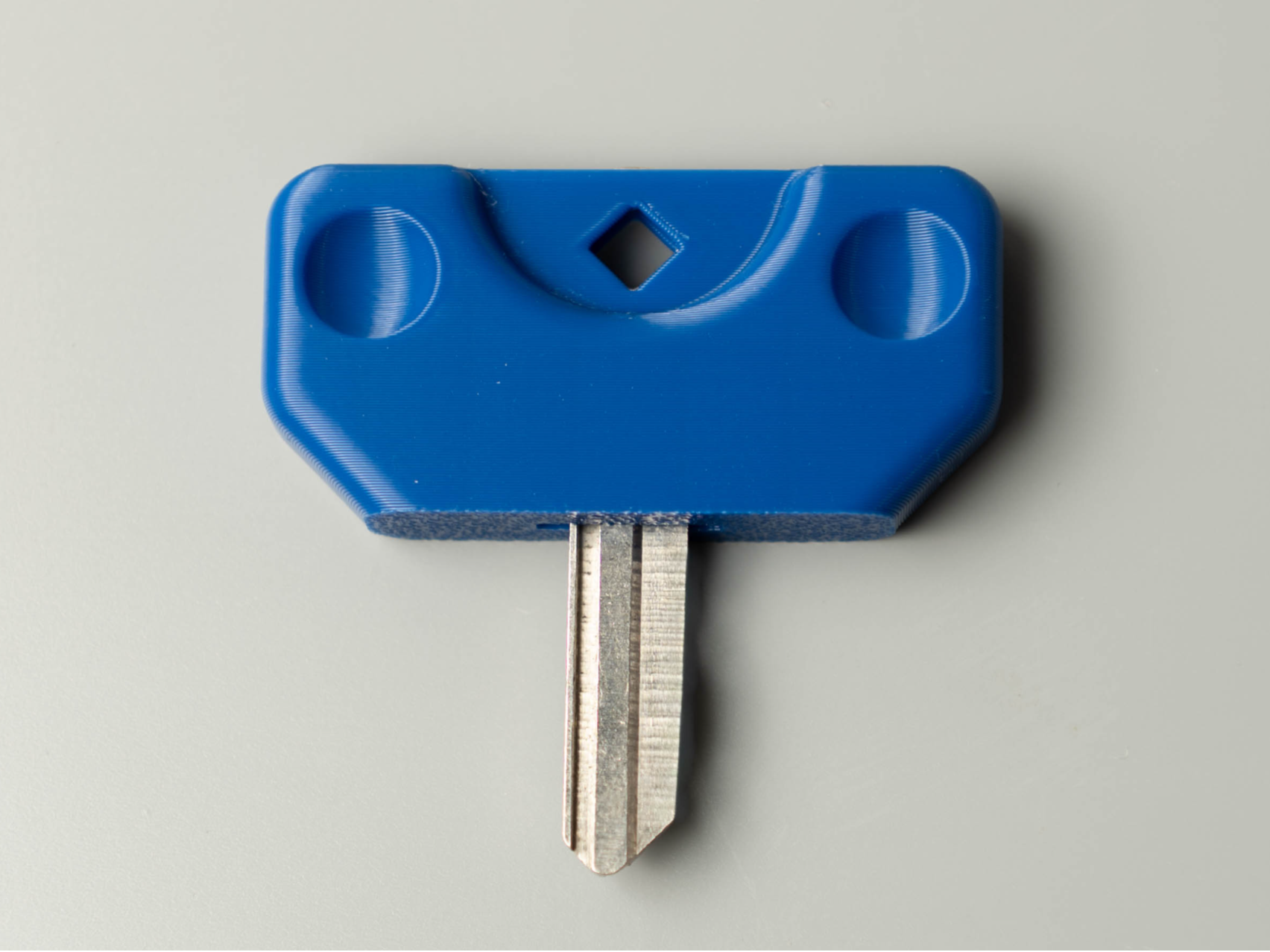
[Enginerd]’s chonky key handle is a beautiful use of 3D printing that helps people help themselves. The large wings, indented faces, and beefed-up grip make a typical house key much easier for someone with arthritis or difficulty gripping those brass slivers. Bright filaments in different colors can also help someone with vision limitations. The thing that will not improve is the space in your pocket or purse.
The design only requires a tiny bit of plastic, prints without supports, and what sets it apart from similar models is that you do not need any double-sided tape or bolts, only a keyring,...
TurboQuant: Reducing LLM Memory Usage With Vector Quantization

Large language models (LLMs) aren’t actually giant computer brains. Instead, they are effectively massive vector spaces in which the probabilities of tokens occurring in a specific order is encoded. Billions of parameters, times N bits per parameter, equals N-billion bits of storage required for a full model. Since increasing the number of parameters makes the models appear smarter, most effort on reducing the storage they require has been on reducing the size of the parameters themselves.
Vector quantization (VQ) is a new method that can compress the vectors calculated during inference to take up less space without significant loss of data....
Open-source hardware DAB+ receiver combines ESP32 SoC with Skyworks SI4684 digital radio chip

When I wrote about a DIY ESP32-S3 internet radio last week, “raspbeguy” commented he’d rather choose an ESP32-based DIY DAB+ receiver kit, such as the one offered by the PE5PVB project based on a Skyworth SI4684 receiver. I first heard about DAB (Digital Audio Broadcast) in 2003 when we considered adding it to a CD player. It’s basically the digital equivalent of analog FM/AM radios, and I haven’t heard much about it since DAB and the “new” DAB+ standard are mostly a European story (see coverage map below). PE5PVB’s open-source hardware DAB receiver might still be worth a look. PE5PVB’s...
The Brits Made a Rocket. What Happened To It?
https://invidious.privacyredirect.com/watch?v=-DR20rDr6yA

Like many long-established broadcasters, the BBC put out a selection of their archive material for us all to enjoy online. Their most recent may be of interest to Hackaday readers and has more than a bit of personal interest to your scribe, as it visits the Spadeadam rocket test range on the event of its closure in 1973. This marked the final chapter in the story of Blue Streak, the British intercontinental missile project that later became part of the first European space launcher.
It’s possible citizens of every country see their government as uniquely talented in the throwing away of...
Sipeed T256s – A USB thermal camera with 256×192 LWIR sensor, 640×480 AI super resolution

Sipeed T256s is a portable USB thermal camera equipped with a native 256×192 Long-Wave Infrared (LWIR) sensor and a built-in 2.4 TOPS NPU for hardware-level AI super-resolution (ISR) up to 640×480 resolution in real time, effectively suppressing image noise without external software. The UVC camera device supports standard output (Y16 raw and MJPEG) and features both male and female USB Type-C ports on opposite ends for connection to PCs and smartphones. It also includes a 1.69-inch touchscreen for standalone operation with live viewing, palette switching, hotspot tracking, and image capture. Other features include an optional macro lens (~5 cm focus)...
WolfIP Doesn’t Allocate
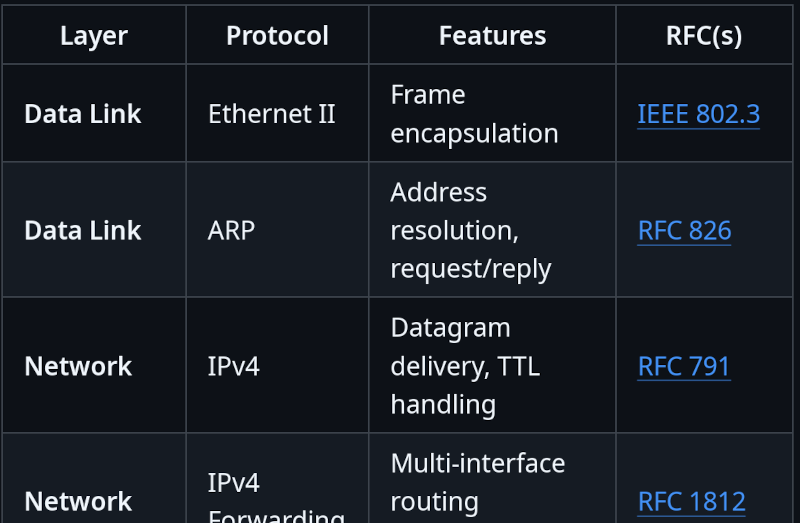
For some types of embedded systems — especially those that are safety-critical — it’s considered bad form to dynamically allocate memory during operation. While you can usually arrange for your own code to behave, it’s the libraries that get you. In particular, it is hard to find a TCP/IP stack that doesn’t allocate and free memory all over the place. Unless you’ve found wolfIP.
The library supports a BSD-like non-blocking socket API. It can act as an endpoint, but can also support multiple interfaces and forwarding if you were building something like a router. It doesn’t appear to be bare-bones either....
RealSense ID Pro F500 Combines Depth Sensing and On-Device Biometrics
RealSense has introduced the RealSense ID Pro F500, a facial authentication module designed for access control, kiosks, and identity verification systems. The solution combines depth sensing, vision processing, and local computation to support secure biometric authentication without relying on cloud-based processing. The module integrates an active stereo depth system with a neural network pipeline for […]
Flash Bee – An ESP32-C3-based DIY handheld lightning detector

Flash Bee is an easy-to-make DIY handheld lightning detector based on off-the-shelf parts such as the XIAO ESP32C3 board and the Round Display for XIAO, as well as a 3D-printed enclosure. The design relies on the AMS AS3935 Franklin lightning sensor that’s been around for years, and found in kits like Sparkfun’s Arduino IoT weather station, which is capable of detecting lightning up to 40 km away with 1km accuracy. While it’s not quite new technology, I found the Flash Bee design to be rather cute and convenient, and it looks really easy to reproduce. Flash Bee key components: Seeed...
You’ve All Seen A Hackintosh, But Have You Seen One On A Wii?
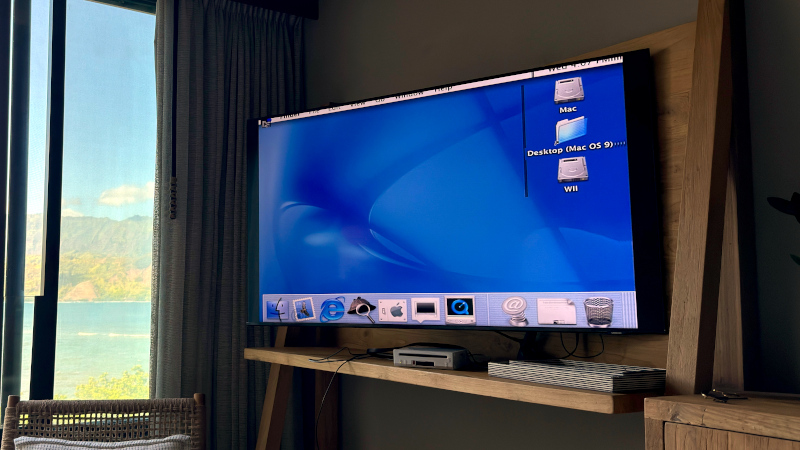
The Intel era of Apple Macs led to so-called “Hackintoshes”, more normal PCs running x86 MacOS X. Now Bryan Keller proves that a Hackintosh isn’t restricted to the x86 era, not by doing it with a modern ARM version, but by going back to PowerPC, and the Nintendo Wii.
The Wii can be thought of in hardware terms as not too far from a Mac G3 with a little less memory, having a PowerPC 750-family processor, a close relative as those in the first generation of MacOS X capable Macs. Since the roots of MacOS X are shared with its open-source...
Nissan Shuts Down NissanConnect App for Older Leaf EVs

Back in late February Nissan Leaf owners began to receive messages from Nissan informing them that the remote features in their cars would cease operation as the NissanConnect app would drop support for Leaf EVs produced before 2020 as well as eNV200 vehicles that were produced until 2022. The indicated cut-off date was March 30, giving affected users about a month to come to terms with the fact that their vehicle would soon to losing any and all remote control features.
What this highlights is an increasingly pertinent question when it comes to ‘connected cars’, which feature a built-in wireless modem...