Feed linux for devices [copy] http://www.linuxfordevices.com/rss-feeds-1.xml has loading error: cURL error 22: The requested URL returned error: 404
Feed SparkFun Electronics [copy] http://www.sparkfun.com/feeds/news has loading error: cURL error 22: The requested URL returned error: 405
Feed The RFID Weblog [copy] http://www.rfid-weblog.com/index.rss has loading error: cURL error 22: The requested URL returned error: 404 Not Found
934 MHz: When The Government Really Doesn’t Want You To Have CB
https://invidious.privacyredirect.com/watch?v=poit_QRN89o

In the mid 1970s there were a spate of movies depicting the romance and lifestyle of truck drivers in the southern half of the United States. Over on the other side of the Atlantic these were naturally received not as works of drama but as documentaries, and thus began a craze for British drivers to do up their Ford Capri so in the right light and with your eyes nearly closed, it almost looked like Burt Reynolds’ Pontiac Trans Am from Smokey and the Bandit.
Such a fine automobile was of course incomplete without a CB radio, highly illegal at the...
Rescuing a Pokémon off a Pokéwalker After Losing the Game Cartridge
https://invidious.privacyredirect.com/watch?v=lbTG2NYnzPQ
Cloning a Snickers. {Credit: Etchy, YouTube)
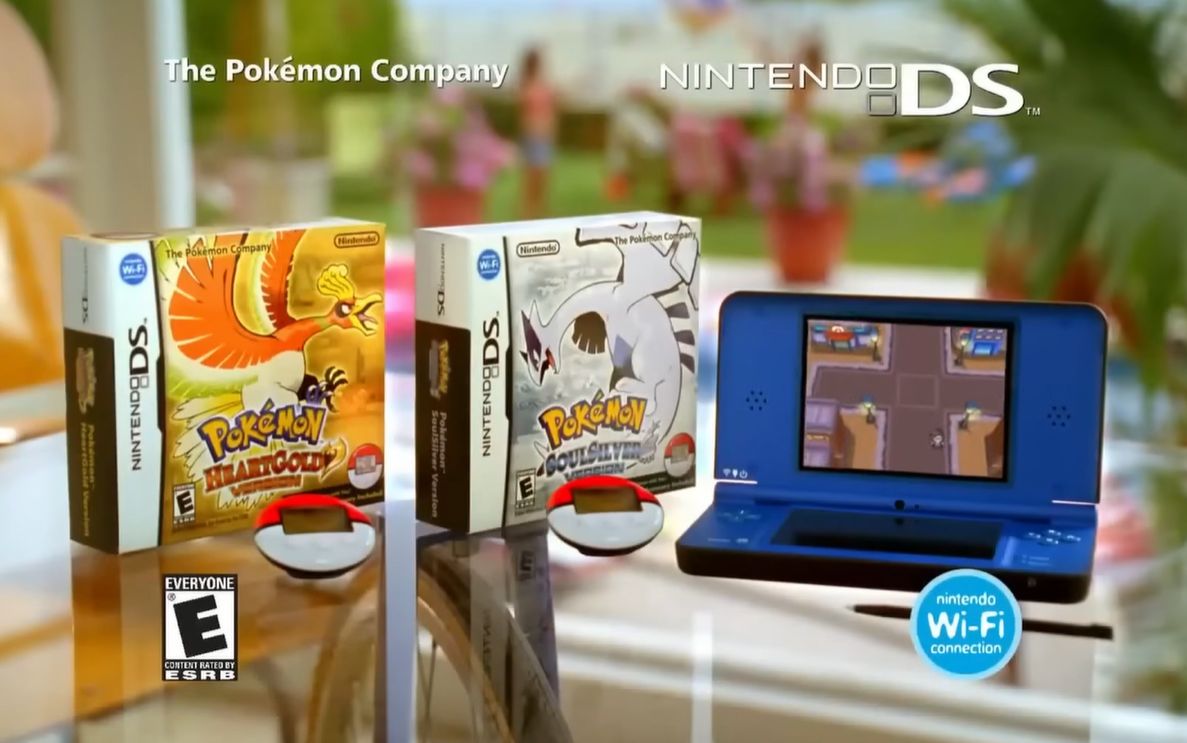
The Pokéwalker is a gadget that was sold alongside the Pokémon HeartGold and SoulSilver games for the Nintendo DS, using which you could take a Pokémon of your choice with you on a walk. Not only would you earn points while walking, but you’d be able to find items, battle wild Pokémon, etc. The Pokémon inside the device is however linked to the game cartridge. This fact turned into tragedy when [Etchy] found his old Pokéwalker with a treasured Pokémon still on it, but was forced to erase the device as he had lost the...
NASA Artemis Watch 2.0 – An ESP32-S3-powered, NASA-inspired wearable kit for education

CircuitMess NASA Artemis Watch 2.0 is a programmable, NASA-themed smartwatch based on an ESP32-S3 WiFi and Bluetooth module and a 1.14-inch monochrome display. The watch also features an accelerometer, a gyroscope, a buzzer, an RTC, a button, several LEDs, and a USB port for programming and charging the built-in 600 mAh battery. NASA Artemis Watch 2.0 specifications: Core module – ESP32-S3-MINI-1-N4R2 SoC – ESP32-S3 dual-core Xtensa LX7 processor with WiFi 4 and Bluetooth 5.0 connectivity Memory – 2MB PSRAM Storage – 4MB QSPI flash PCB antenna Display – Built-in 1.44-inch display USB – 1x USB Type-C port for charging and...
AAEON Intelli TWL01 Edge fanless mini PC features up to Core 3 N355 Twin Lake CPU for kiosks and digital signage applications

AAEON Intelli TWL01 Edge is an industrial mini PC with dual 4K display support powered by an Alder Lake-N/Twin Lake processor up to the Intel Core 3 N355 CPU and designed for kiosks, video conferencing suites, video walls, and interactive billboards. The fanless computer ships with up to 16GB of RAM and 64GB of eMMC flash, offers M.2 sockets for NVMe storage and WiFi/Bluetooth connectivity, and features two Gigabit Ethernet ports, four USB 3.2 ports, an RS-232/422/485 COM port, and more. The company also provides DIN rail, wall, and VESA mounting options for the mini PC. AAEON Intelli TWL01 Edge...
$2 WeAct CH32V006F8U6 Mini Core board features CH32V006 RISC-V MCU, supports 3.3V or 5V I/O voltage

WeAct CH32V006F8U6 Mini Core is an inexpensive, tiny development board based on the 48 MHz CH32V006 RISC-V microcontroller and equipped with a USB-C port, a Reset button, and two rows of 12-pin headers for I/Os using either 3.3V or 5V voltage. WCH introduced the CH32V006 in 2024 as an update to the popular CH32V003 with more memory (8KB vs 2KB SRAM), storage (62KB vs 8KB flash), additional GPIOs, a wider supply voltage range, and an upgraded 32-bit RISC-V2C core. I just hadn’t seen any third-party CH32V006 boards so far. The WeAct Studio board changes that. WeAct CH32V006F8U6 Mini Core board...
Advantech MIO-5356 – An industrial 3.5-inch SBC based on Intel Core Series 3 “Wildcat Lake” SoC

Advantech MIO-5356 is the very first hardware platform based on the upcoming Intel Core Series 3 (Core 300) “Wildcat Lake” SoC we’ve seen. It’s a 3.5-inch SBC designed for industrial applications and powered by up to the Intel Core 7 350 hexa-core processor. The fanless board supports up to 64GB DDR5 memory, NVMe SSD storage, up to three independent displays via USB-C, HDMI, and LVDS interface, 2.5GbE and GbE networking with TSN and OOB management, and WiFi, Bluetooth, and Cellular connectivity via M.2 sockets. It also features audio connectors, six USB interfaces, RS232/RS485 and CAN Bus interfaces, and more. Advantech...
ESP32-S3 gets post-quantum encryption with Aethyr Edge Node open-source firmware

Aethyr Research has released post-quantum encrypted IoT edge node firmware for ESP32-S3 targets that boots in 2.1 seconds and supports full PQC (Post Quantum Cryptography) handshakes in 35ms. Public-key cryptographic algorithms such as RSA and ECC will soon have to be replaced due to the advance of quantum computers that will be able to crack such encryption within a few hours to days using Shor’s algorithm. While there’s still time, Google recently updated its timeline for post-quantum cryptography migration to 2029, mostly because it’s possible to store data now for an attack once sufficiently powerful quantum computers become available, and...
Velxio is an open-source, self-hosted Arduino, Raspberry Pi, and ESP32 simulator

Velxio is an open-source, self-hosted simulator for Arduino, ESP32, and Raspberry Pi boards that works directly in your web browser. You can drag-and-drop boards, connect components and modules, write and run code in Arduino or Python, and access the serial console, all without hardware. If it looks similar to what the Wokwi simulator has to offer, it’s because Velxio was inspired by it and even integrates the AVR8 CPU emulator, RP2040 emulator, and QEMU fork for ESP32 Xtensa emulation from the Wokwi project. But the key difference is that Velxio can be self-hosted, although there’s also an online demo. Velxio...
M5Stack Refreshes Lineup with CardKB2 Keyboard, ESP32-P4 Modules, and Core2 for AWS
M5Stack has introduced several new and updated products, including the CardKB2 keyboard unit, the Stamp-P4 module based on the ESP32-P4, a matching Wi-Fi expansion module, and an updated Core2 for AWS development kit. The lineup spans input devices, embedded modules, and IoT-focused development platforms. The CardKB2 is a compact 42-key keyboard built around the ESP32-C61HF4, […]
Build your own Dial-up ISP with a Raspberry Pi

Last year my aunt let me add her original Tangerine iBook G3 clamshell to my collection of old Macs1.
It came with an AirPort card—a $99 add-on Apple made that ushered in the Wi-Fi era. The iBook G3 was the first consumer laptop with built-in Wi-Fi antennas, and by far the cheapest way to get a computer onto an 802.11 wireless network.